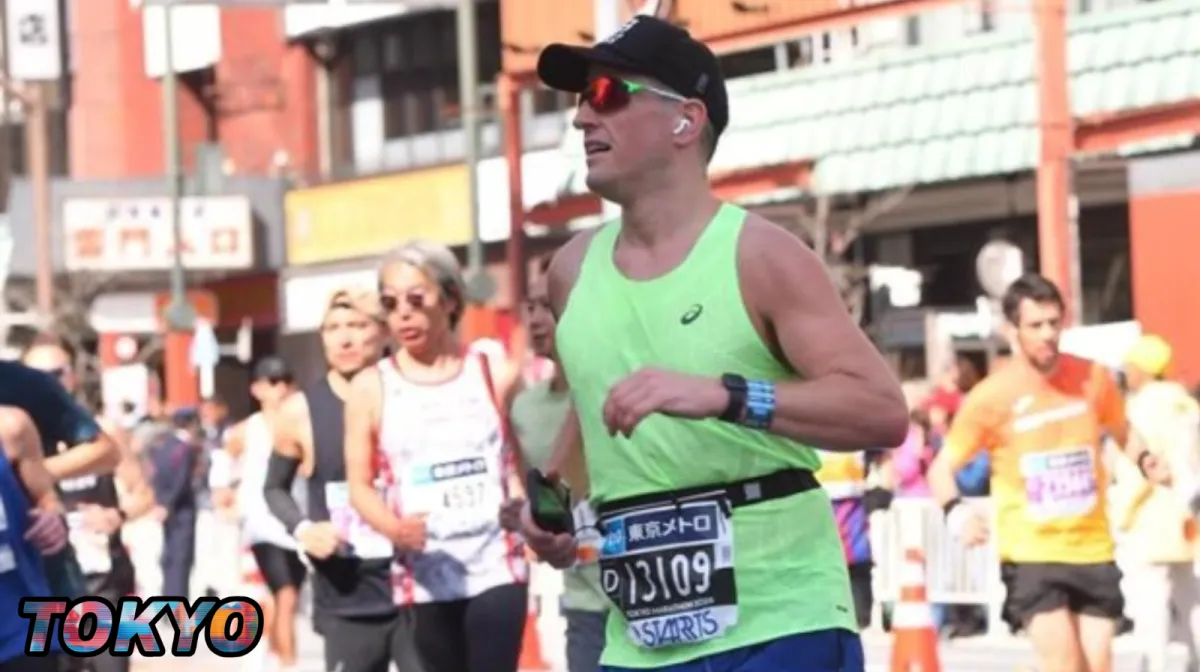
Tokyo Marathon: When the Plan Meets the Reality
For months, Tokyo lived in my head.
The training had been there. Early mornings. Long runs. The quiet confidence that comes from doing the work. I had travelled across the world to stand on this start line, and somewhere in the back of my mind there was a belief that this might be the race where everything came together.
But marathons have a way of writing their own story.
The Morning
Standing in the start area in Tokyo, I felt that mix of excitement and nerves that every marathon runner knows. My wave was Wave D, about four waves back from the front, roughly where the 3:30 runners begin. That meant from the very beginning I knew positioning was going to matter. Starting further back always means weaving through runners, and that can make the early kilometres more work than planned.
Before the race even began there was the universal pre-race ritual: finding a toilet.
The queue stretched forever. It took about twenty minutes just to get to the urinals. By the time I made it back into the starting area, the nerves had properly settled in. Not panic. Just the quiet awareness that a lot had gone into this day.
Tokyo itself was incredibly organised. Everything ran with a kind of calm precision. Volunteers guided runners into their exact zones, and they were strict about it. You weren’t slipping into a corral you didn’t belong in.
Still, before things got too crowded, I managed to move slightly forward into the C group, finding a spot where I hoped the early pace would settle.
Then the race began.
Finding a Rhythm
The first few kilometres were crowded. Runners everywhere. Constant weaving as I tried to settle into pace while navigating around others.
But gradually the rhythm came.
The body felt like it was working, but in a controlled way. The kind of effort where you know you're pushing, but it still feels sustainable. The kind of feeling that quietly makes you think, maybe today is the day.
Fueling was going exactly how I’d planned. I was taking Winners gels every twenty-five minutes. First at 25 minutes, then again at 50 minutes, then continuing that rhythm.
Around 20 kilometres, though, something shifted.
At first it was just a subtle wave in my stomach. The kind of feeling you try to ignore. Marathon runners are very good at ignoring small problems.
But the nausea didn’t go away.
It stayed with me.
When the Race Changes
Somewhere after halfway, I realised the race I had planned was no longer the race I was running.
The stomach wasn’t settling, and then, around 30 kilometres, my right quad cramped.
Not a little twitch. A real cramp that forced me to slow down.
I pulled up briefly and stretched, hoping it would pass. As soon as I started running again, my hamstring threatened to seize completely, like it was ready to snap into a full charley horse.
For a moment I thought the race might be slipping away completely.
But the cramp eased just enough for me to keep moving.
Then it came back again, this time sitting just above my right knee.
From that moment on, the race changed.
This was no longer about chasing pace.
It was about getting to the finish line.
The Heat and the Mind Games
The day had started cool, almost perfect for running. But as the hours passed, the sun began to push through. By late morning it felt warm and humid, and suddenly every aid station mattered.
At every stop I grabbed water and Pocari Sweat, pouring some over myself and drinking as much as I could manage.
Even with that, it felt like the heat was creeping into my body.
Then came the switchbacks.
If you’ve ever run a marathon with switchbacks, you know the mental challenge they bring. You see runners heading the other direction. You see the road stretching further than you want it to.
When your legs are cramping, those moments feel longer.
The kilometres started to drag.
The Messages
One thing that kept me moving was the WhatsApp chat running during the race.
Friends and family were sending messages of support as they tracked the race. The phone struggled with them sometimes. Longer messages would simply say “Read?” without actually playing the content, and the shorter ones would occasionally skip.
But knowing people were there mattered.
Around 35 kilometres, when the race really started to hurt, those messages felt important.
Then a voice message came through from Brendan, my husband.
He simply said how proud he was.
I nearly cried right there on the course.
When you're deep into the pain of a marathon, those words land differently.
When the Watch Died
Then something unexpected happened.
My Apple Watch died at two hours.
After months of training with data, pace, and splits, suddenly it was all gone.
No pace. No distance updates. No guidance.
Just me and the road.
Strangely, it simplified things.
There was no longer anything to analyse. Nothing to chase.
All that was left was to keep running.
The Finish
Crossing the finish line brought a wave of emotion.
Relief more than anything.
I finished in 3:21:52.
Not the sub-three I had come for.
But still my second fastest marathon ever.
At that moment though, the time barely registered.
I was completely drained.
The Tokyo finish area requires runners to walk nearly a kilometre before you can leave the chute, and that walk felt endless. All I wanted was to find somewhere to sit.
Eventually I did.
Brendan had been waiting, but because there were two separate exit routes we ended up on opposite sides of the finish area. When we finally connected, he handed me my Birkenstocks so I could get my running shoes off.
That small act felt like luxury.
Even then, it took almost an hour before I could properly stand up again. Rehydrating, sitting, letting the body settle before we slowly made our way back to the train and eventually back to our accommodation.
Looking Back
The Tokyo Marathon ended up being one of the toughest races I’ve run.
Not because of the course.
But because things didn’t go to plan.
The stomach issues.
The cramps.
The heat.
The watch dying.
Marathons have a way of revealing what you do when things stop being perfect.
And despite everything, I kept moving.
The Next Chapter
There are races where everything clicks.
And there are races where you fight for every kilometre.
Tokyo was the second kind.
And those races, in their own way, matter just as much.
Because the goal hasn’t changed.
The sub-three marathon is still there.
And the next chance is already waiting.
Canberra. April.
For now, though, I’m grateful.
Grateful for the experience.
Grateful for the support.
Grateful to have crossed that finish line.
And grateful that the story isn’t finished yet.
